
Masterclasses
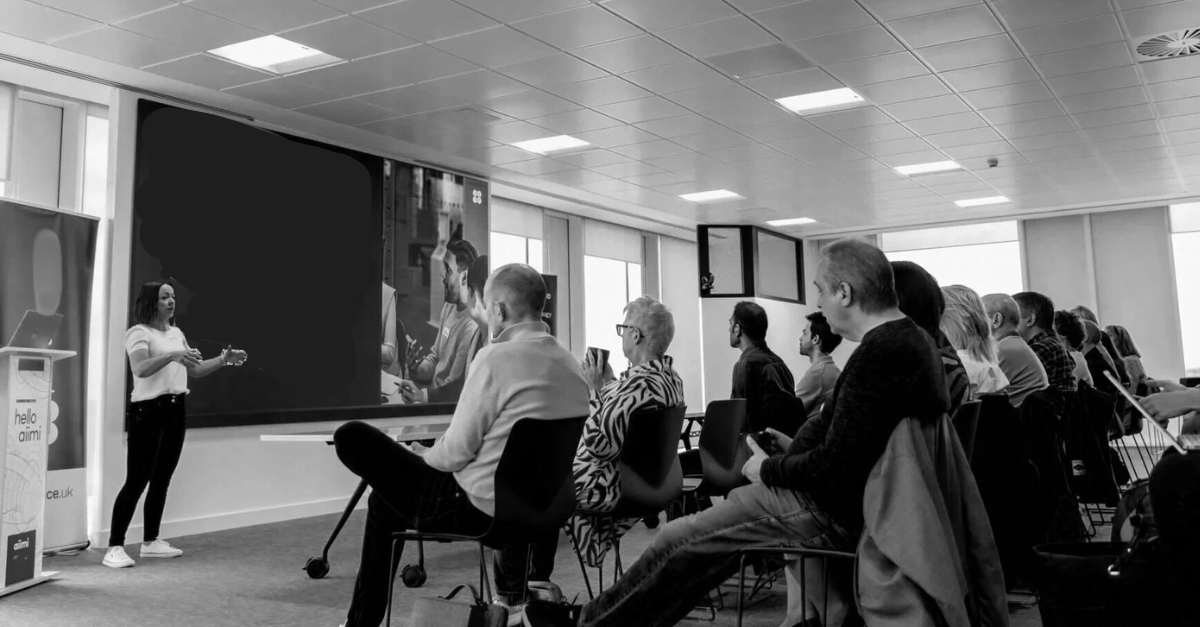
You’ll walk away from the online masterclasses with key skills and knowledge you can put into practice immediately.
Half-Day and One-Day Masterclasses
Customer Discovery
Most early-stage founders waste months building products nobody wants.
This one-day course draws upon Dr Chloe Sharp’s extensive experience in business strategy, research, interviewing and product management to teach you how to get the most from speaking to your customers.
Your time is precious; you should be spending it speaking to your customers. This course maximises the impact and gives you techniques and frameworks that help you understand genuine product market fit rather than the enthusiasm of friends, family and your supportive network.
Through practical demos and hands-on practice, you’ll learn how to ask the right questions, using a problem-first mindset to uncover past behaviours and avoid bias. You’ll also learn how to reach strangers, not just your existing network, so you can get some really honest feedback.
By the end of the course, you’ll have played interviewer and interviewee, learning to spot ‘mistakes’ in real time and course correct. You’ll have practical templates for interviewing and outreach.
This course is for any founder who is conducting customer interviews to validate their assumptions. Particularly helpful for pre-seed and seed stage, or if you are prone to building something and then hoping to push it to market, in addition to more established companies interested in new market entry and market expansion.
Dates:
Limited to 12 spaces per course - 9:30am to 4:30pm UK (GMT) | 26 March 2026 | 23 July 2026 | 3 Dec 2026
Ready to test solutions? Continue with Prototyping & Testing for Validation.
Prototyping + Testing for Validation
Founders can build too much too soon, or conduct customer interviews but then struggle to translate their insight into prototypes or testable solutions.
This one-day course teaches you to move from validated problems to prototype experiments quickly and cheaply. You'll learn to match prototype fidelity to the question you're answering, whether that's concept understanding, usage intent, or willingness to pay, building just enough to test your riskiest assumptions without wasting time on unnecessary features.
Through framework teaching and hands-on building time, you'll learn smoke tests that measure genuine demand before writing code, wireframes for testing workflows without backend infrastructure, and "Wizard of Oz" techniques where you manually deliver what will eventually be automated. You'll understand when a landing page is sufficient or when you’ll need a functional demo.
In the morning, we cover validation strategy and prototyping techniques, including live demonstrations. In the afternoon, it’s practical, building a prototype for your own concept (we’ll provide tools), then getting feedback from the group before designing experiments to run afterwards.
By the end of the course, you'll have a prototype toolkit covering tools, templates, and an experiment design canvas for testing your hypothesis. You'll know how to build low-fidelity prototypes quickly and which validation questions they can answer.
This course is for pre-seed founders who've completed customer discovery and need to test solution assumptions, particularly if you're technical and prone to jumping straight to high-fidelity builds.
Works standalone or as a natural follow-on from Customer Discovery for Founders.
Dates:
Limited to 12 spaces per course - 9:30am to 4:30pm UK (GMT)
16 March 2026 | 13 July 2026 | 30 Nov 2026
AI-Powered Validation: From Desk Research to Prototyping
Founders could spend many hours manually analysing interview transcripts as they couldn't afford professional research services or analysis tools, and then painstakingly built prototypes for days.
You know AI can do this and save you time, but how and what are the risks?
This half-day course shows you how Dr Chloe Sharp, with a PhD, leadership experience and a research career, uses AI to accelerate every stage of validation, from transcription to thematic analysis for efficient business processes, and pulling a light-weight prototype together. All while maintaining ‘research rigour’ and learning to spot when AI (inevitably) gets it wrong.
You'll learn which validation tasks AI genuinely speeds up and that just need a human to do it. We'll cover the use of transcription tools to process interviews, prompt engineering to understand the themes in your interviews and how you can use AI prototyping tools to test concepts before committing to full builds.
The session is hands-on. We’ll show you AI analysis, good and bad, then help you work with your own interview transcripts during structured sessions. We'll cover privacy and ethical frameworks for handling customer data, and most critically, how to identify AI hallucinations and maintain research integrity when working at speed.
By the end, you'll have a validation toolkit with prompts, workflow templates and tool recommendations. You'll save hours on analysis, but be confident it’s been done ‘right’ and you can spot mistakes so you don’t waste time.
This course is for founders who use AI tools and want to use them in their customer research. Particularly valuable if you're resource-constrained and moving fast.
Dates:
Limited to 12 participants per session at 9.30am to 12.30pm UK (GMT)
18 March 2026 | 26 July 2026 | 20 December 2026
Escaping the Pilot Trap
88% of pilots never reach production. Most seed-stage founders waste months running pilots for free, or at special rates for ‘customers’ who love the solution but won't pay for it.
This half-day course teaches you to design pilots that set you up for commercial success, know when to say “no” to ‘opportunities’ that drain time and resources without converting to revenue.
You'll learn why pilots get stuck: if it’s the wrong stakeholders, missing ROI metrics or unclear success criteria and how to run a pilot that gets you executive buy-in instead of just testing with the team. We'll cover setting minimum viable outcomes to satisfy decision makers and price your pilots correctly so they move you towards paid contracts.
We’ll take a detailed look at your in-flight pilots or planned pilots, evaluate their conversion potential, identify any commercial blockers and develop a plan to overcome them.
By the end, you'll have templates for pilot design which include commercial indicators, ways to calculate ROI to demonstrate business impact and clear criteria for when to decline pilot requests. Plus an action plan template for your current pipeline.
This course is for seed-stage founders running pilots that aren't converting to revenue. Particularly valuable if you're stuck in endless testing cycles, prospects keep asking for extensions, or you're unsure which opportunities deserve investment versus strategic abandonment.
Dates:
Limited to 12 participants per session, 9.30am to 1.00pm UK (GMT)
19 March 2026 | 27 July 2026 | 10 December 2026
Two-Day Masterclasses

Go-to-Market & Distribution Channel Validation
Most seed-stage founders with product-market fit don't know how customers will actually find them at scale. You've proven people want your product, but you're unclear which channels will work, where your users spend time, or how to structure experiments that generate reliable acquisition data instead of vanity metrics.
This two-day course teaches you to build GTM strategies grounded in user behaviour, not assumptions. You'll learn frameworks for channel selection, how to test distribution hypotheses systematically, and how to design experiments that measure genuine acquisition potential before you commit to scaling budgets.
Day one covers GTM fundamentals and strategy. You'll understand how customers actually discover solutions, map where your target users spend time, identify which channels match their behaviour, and learn frameworks like AARRR for building comprehensive acquisition and retention strategies. The focus is on strategic thinking, understanding what GTM actually means and how to formulate approaches that work for your specific user base.
Day two is practical application. You'll build evidence-based personas from real data sources (e.g. CRM, past user feedback), conduct desk research to validate channel hypotheses, map testable distribution channels, design retention and return mechanisms, and devise metrics for running controlled experiments. You'll leave having set up tests you can execute immediately post-course.
By the end, you'll have persona templates that you can later ground in real user data, channel mapping frameworks showing where to test first, experiment design protocols with clear success metrics, and execution plans for validating your highest-potential channels systematically.
This course is for Seed-stage founders with product-market fit who need to prove which acquisition channels will scale. Particularly valuable if you're growing through unsustainable methods, building marketing budgets on untested assumptions, or unclear about how users will discover you beyond your current cohort.
Writing Successful Grant Applications
Over 70% of Innovate UK grant applications get rejected, not because your tech isn’t innovative, but because the commercial section is weak. No market evidence, too much reliance on “tech push”, and lack of competition analysis. Make your application stand out.
This two-day course draws on Dr Chloe Sharp’s extensive experience in grant writing, having won over £10M in funding. It teaches you to build market evidence through customer discovery, translate technical innovation into assessor-friendly language, and write applications that score highly on the commercialisation criteria that boost your funding success. You'll learn what assessors look for and what they reject and, critically, how to handle resubmissions.
Day one covers building evidence from discovery. You'll understand Innovate UK assessment criteria and learn to define problems and market opportunities in terms that assessors trust. You'll learn to build your commercials with credible routes to market, customer validation evidence, and pricing models and unit economics grounded in real willingness-to-pay.
Day two focuses on application writing. You'll draft key sections with peer review, learning to make technical content accessible. You'll complete financial sections, milestone-based, and resource allocation. We end with submission checklists, AI use best practices, common errors, what happens post-submission, and how to reapply successfully if rejected
By the end, you'll have an annotated Innovate UK application template including a customer interview guide designed, financial model templates covering unit economics and market sizing, commercialisation section examples from funded applications, and market sizing frameworks.
An optional 60-minute application review call is available for £150 (contact us for details).
This course is for founders applying for Innovate UK grants. Particularly valuable if you're deep tech or technical founders who can explain your tech but need to strengthen your commercials, or if you've been rejected previously for weak market validation.
Dates:
Limited to 12 participants per course, two full days, 9.30am to 4.30pm UK (GMT)
23–24 March 2026 | 20–21 July 2026 | 7–8 November 2026